The Role of IoT in Predictive Systems
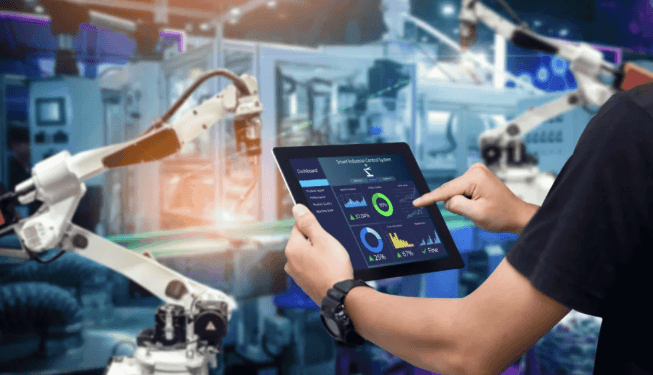
IoT supplies continuous, real-time data from diverse sensors and edge devices. This feeds scalable analytics pipelines that identify patterns and anomalies. Modular sensor networks enable flexible deployment, while edge analytics cut latency and bandwidth use. Central governance ensures data quality, lineage, and compliance with transparent access and versioned models. The resulting insights drive automated, timely decisions, boosting efficiency and resilience. The discussion rests on how these elements integrate to deliver measurable outcomes, inviting further examination of implementation trade-offs.
How IoT Enables Predictive Intelligence
IoT enables predictive intelligence by collecting continuous, real-time data from sensors, devices, and edge systems and feeding it into analytics pipelines. The approach emphasizes modular sensor networks, scalable processing, and real-time alerts. It addresses privacy concerns and strengthens data governance through transparent access controls, audit trails, and standardized metadata. Decisions remain system-driven, autonomous, and aligned with user freedom and responsible innovation.
From Data to Decisions: The Predictive Pipeline
From data collection to actionable insight, the predictive pipeline translates raw sensor streams into decisions through a disciplined sequence of ingestion, processing, modeling, and feedback. It integrates data governance frameworks to ensure quality, lineage, and compliance while continuous sensor calibration keeps measurements trustworthy. Clear interfaces, versioned models, and automated governance minimize drift, enabling timely, reliable decisions and adaptable, freedom-minded outcomes.
Real-World Use Cases Across Industries
Across industries, real-world IoT deployments demonstrate how connected devices translate sensor data into actionable outcomes, from proactive maintenance to operational optimization. The emphasis lies on edge analytics enabling local insight, and device interoperability ensuring seamless data fusion.
Use cases span manufacturing, logistics, energy, and healthcare, illustrating scalable automation, faster decision cycles, and measurable efficiency gains while preserving operator autonomy and system resilience.
Designing Resilient IoT-Powered Predictive Systems
Systems should emphasize modularity, secure data pipelines, and clear ownership.
Embrace edge analytics to preprocess signals locally, reduce latency, and conserve bandwidth, while centralized governance ensures consistency, compliance, and actionable visibility across heterogeneous IoT environments.
Frequently Asked Questions
How Is Data Privacy Ensured in Iot Predictive Systems?
Data privacy is ensured through data minimization and policy enforcement, limiting collection and access. The system enforces least-privilege, permissions auditing, encryption in transit and at rest, anonymization where possible, and continuous compliance monitoring for freedom-minded stakeholders.
What Are Common Pitfalls When Scaling Iot Analytics?
Images of tangled cables fade as systems scale: scaling pitfalls emerge. Analytics governance anchors action, guiding data quality, access, and accountability. The approach remains concise, actionable, system-minded, and freedom-oriented for teams expanding IoT analytics responsibly.
See also: The Role of IoT in Environmental Monitoring
Which Metrics Best Measure Predictive Model ROI?
Predictive ROI is best tracked via model performance metrics such as precision, recall, and AUC, coupled with business impact indicators like cost savings, downtime reductions, and latency improvements; the approach emphasizes actionable, system-minded evaluation for autonomous optimization.
How Do Edge vs. Cloud Resources Affect Latency?
Edge latency dominates when processing stays near devices; cloud orchestration mitigates spikes via centralized scaling, but adds round-trip delays. A balanced deployment minimizes tail latency, leveraging edge for immediacy and cloud for orchestration flexibility.
What Skills Are Essential for Iot Predictive Engineers?
Bold gears hum as an IoT predictive engineer requires data governance, robust analytics, model maintenance, and cybersecurity mindset; systems thinking, cross-domain collaboration, continuous learning, and practical risk assessment empower freedom-loving teams to deliver reliable predictions.
Conclusion
IoT-backed predictive systems deliver timely, automated decisions by streaming diverse sensor data into scalable analytics pipelines, with edge analytics trimming latency and bandwidth while modular networks enable rapid deployment. Central governance ensures data quality, lineage, and compliant access. An impactful statistic: organizations leveraging real-time IoT analytics report up to 50% faster issue detection and 30–40% reductions in unplanned downtime. Actionable takeaway: design resilient pipelines with modular sensors, edge processing, and transparent governance to sustain proactive, data-driven operations.